

 Minaam Jamil
 Mar 13, 2026
Jump To Section
Living with PCOS (Polycystic Ovary Syndrome) can feel like you’re fighting a hard battle against your own body. If you’ve ever asked how hard it is to lose weight with PCOS, the answer is that it can feel incredibly frustrating because hormonal imbalances, like insulin resistance, often make your body hold onto fat more easily.
Many people struggle with this cycle, finding that traditional dieting advice just doesn’t work, which can leave you feeling defeated despite your best efforts.
But here is the truth: weight management is absolutely possible. You don’t need magic pills or impossible routines to see results. By shifting your focus to a natural process that works with your hormones rather than against them, you can start seeing changes.
This guide will walk you through how to actually lose weight with PCOS by focusing on the pillars of health: balanced nutrition, consistent movement, quality sleep, and smart stress management.
If you feel like you are doing “everything right” but the scale still won’t move, it is time to stop blaming yourself. Weight gain with PCOS isn’t a lack of discipline; it is a physiological response to how your body is functioning.
When you have PCOS, your hormones are often out of sync, which significantly changes how your body stores fat and regulates hunger. Specifically, higher levels of insulin and androgens can signal your body to store energy as fat around your midsection rather than burning it for fuel. This makes it feel much harder to lose weight compared to someone without these hormonal hurdles.
How to know if you have polycystic ovaries is crucial in understanding why weight gain happens with PCOS. If you suspect you might have this condition, it’s important to get diagnosed through proper tests. Once you understand that you have polycystic ovaries, you can begin to work with your body, not against it.
Understanding these factors is the first step in learning how to actually lose weight with PCOS. Your metabolism is essentially trying to navigate a different set of rules, and once you understand those rules, you can start making choices that support your body instead of fighting it.
In a healthy metabolism, hormones like leptin and ghrelin tell you when to eat and when to stop. With PCOS, this communication often gets fuzzy. Because of insulin resistance, a common symptom where your body doesn’t respond well to insulin, your body may constantly feel like it is “starving,” leading to intense hunger and cravings.
Furthermore, elevated androgens can shift your fat distribution, making it easier to gain weight and harder to lose it, even when you are eating the same amount as your friends.
Fluctuations in blood sugar are one of the biggest reasons people struggle with weight loss. When you eat refined sugars or simple carbs, your blood sugar spikes, followed by a massive crash.
That crash leads to sudden, intense cravings for more sugar to get your energy back up.
Frequent blood sugar spikes trigger more insulin, which tells your body to store more fat. Breaking this cycle is essential for anyone asking how to lose weight with PCOS. By choosing foods that stabilize your blood sugar, you prevent those crashes and keep your energy levels steady throughout the day.
It is not just what you eat; it is how you live. Three major lifestyle factors often fly under the radar:
When you don’t get enough quality sleep, your body increases ghrelin (the hunger hormone) and decreases leptin (the fullness hormone). You literally wake up hungrier.
Chronic stress keeps your cortisol levels high. Cortisol is the body’s “fat-storage” hormone, specifically targeting the belly area. If you are constantly stressed, your body feels unsafe, making it hold onto weight as a protective measure.
Moving your body even in small ways helps your muscles become more sensitive to insulin. You don’t need a grueling workout; consistency in movement is what helps regulate your metabolism over time.
If you’ve spent any time searching for how to lose weight fast with PCOS, you’ve likely been bombarded with “miracle” diets and restrictive plans that promise overnight results. It is important to be clear: quick fixes rarely last, and for those with PCOS, they can actually backfire by further disrupting your delicate hormone balance.
Sustainable weight loss isn’t about extreme restriction; it is about building a consistent lifestyle that treats your body with kindness. When you focus on long-term habits, you aren’t just dropping weight; you are healing your metabolism, which is the only way to keep the weight off for good.
Moving toward a healthier weight with PCOS is a process of refinement, not punishment. Instead of looking for a temporary hack, think about how you can support your body’s natural rhythm every single day.
By focusing on small, manageable changes in your nutrition, activity, and mindset, you create an environment where your hormones can finally rebalance. This is the most effective approach for weight reduction in PCOS and an essential part of Ovarian Syndrome treatment, as it moves you away from the “dieting” mindset and toward a sustainable way of living that honors your health goals.
To lose weight effectively without the stress of “quick fix” failures, prioritize these consistent, gentle habits:
Instead of just cutting calories, add more color to your plate. Focus on whole foods, healthy fats, and high-quality protein to keep you satiated and your blood sugar stable.
You don’t need to run a marathon. Consistent, moderate movement like daily walking or gentle strength training is often more effective for PCOS than high-intensity workouts that might spike your stress hormones.
Since stress directly impacts how your body stores fat, finding ways to lower your cortisol is a non-negotiable part of your weight loss strategy. This could be as simple as five minutes of deep breathing or a nightly tech-free routine.
Treat your sleep as a primary tool for weight management. Better sleep helps regulate the hormones that control your appetite, making it much easier to make healthy food choices the next day.
By shifting your focus to these habits, you are taking control of your health in a way that respects your body’s unique needs. This isn’t about being perfect; it’s about being consistent.
When you are figuring out how to actually lose weight with PCOS, your kitchen is your best tool. You don’t need to follow a boring or restrictive diet.
Instead, think of your meals as a way to keep your blood sugar steady and your hormones happy. By choosing the right foods, you can stop the “hunger rollercoaster” and give your body the fuel it needs to function properly.
Low-glycemic (low-GI) foods are those that digest slowly, preventing those sharp spikes in blood sugar that lead to fat storage. Think of these as your “steady energy” foods:
Protein is essential for weight reduction in PCOS. It helps control your appetite and keeps your blood sugar levels from swinging wildly. Try to add a serving of protein to every single meal:
For a long time, people were told to avoid fat, but healthy fats are essential for hormone production. They keep you satisfied and help your body absorb important vitamins. Incorporate these into your day:
The secret to how to lose weight with PCOS isn’t just about what you add, it’s also about what you slowly take away. Highly processed foods are designed to be addictive and often cause massive blood sugar spikes. Try to limit:
By focusing on these simple food choices, you are building a foundation that makes losing weight feel much more manageable.
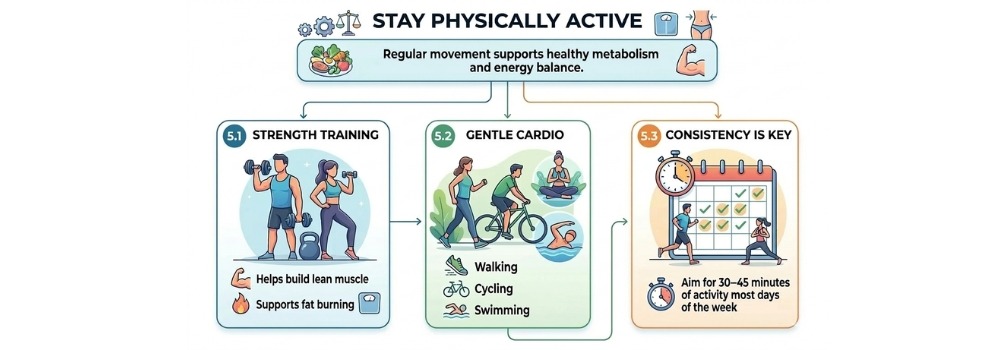
If you are wondering how you can lose weight with PCOS, movement is one of the most effective tools in your kit. However, it is not about killing yourself in the gym for hours at a time.
In fact, high-intensity, exhausting workouts can sometimes stress your body and spike cortisol, which we know can work against your goals. Instead, the focus should be on regular, sustainable movement that supports your metabolism and balances your energy.
Think of exercise as a way to “unlock” your cells. By moving, you are helping your body become more sensitive to insulin, which is exactly what you need to stop the cycle of weight gain. Here is how to keep moving in a way that truly serves your body.
Strength training is perhaps the most underrated tool for weight reduction in PCOS. When you build lean muscle, your body becomes a more efficient fat-burning machine even while you are sitting at your desk.
You don’t have to run marathons to see results. The best exercise is the one you actually enjoy and will stick with long-term. Gentle cardio helps keep your heart healthy and reduces stress without overtaxing your system:
When looking for how to actually lose weight with PCOS, remember that intensity does not replace consistency. You don’t need to go from zero to one hundred overnight.
The goal is to keep your body moving in a way that feels good and energized, not drained. When you stay consistent, you aren’t just burning calories; you are teaching your body how to use energy properly again.
If you’ve been searching for how to lose weight with PCOS, you’ve likely realized that the secret isn’t just in the gym, it’s in the rhythm of your day. Your hormones, especially insulin, thrive on consistency.
When your routine is chaotic, your hormones often follow suit, leading to that stubborn weight gain many with PCOS know all too well.
The good news is that you can actively nudge your body back into balance through simple, daily habits. By creating a predictable environment for your metabolism, you stop the constant hormonal “fight or flight” mode and start working in harmony with your body. Here is how to keep things balanced naturally.
If you’re struggling to achieve this balance, working with a hormonal therapist in Calgary can help you create a personalized plan to support your hormone health and tackle the challenges of PCOS. Here is how to keep things balanced naturally:
It might sound simple, but your hormones love a schedule. Here are three core habits to help you regain control:
Skipping meals or going too long without eating can cause your blood sugar to plummet and then spike when you finally do eat.
By eating at consistent times, you keep your insulin levels stable throughout the day, which is one of the most effective ways to support weight reduction in PCOS.
This is a big one. High sugar intake causes rapid insulin surges. Over time, this leads to insulin resistance, which signals your body to hold onto fat. By cutting back on added sugars, you are directly addressing a root cause of weight gain in PCOS.
Think of fiber as your secret weapon. Whether it is beans, lentils, or cruciferous vegetables, fiber slows down the absorption of sugar into your bloodstream. This prevents that “crash” that leads to intense cravings and helps keep you feeling satisfied for hours.
When you prioritize these habits, you aren’t just “dieting”; you are creating a physiological foundation for health. By keeping your blood sugar stable and your digestion moving, you reduce the inflammation that often accompanies PCOS. This, in turn, makes it much easier to manage your weight without the constant struggle against hunger and fatigue.
Remember, this is a long-term approach. You don’t need to be perfect every day; you just need to be consistent with these small, intentional choices. Over time, these habits become second nature, and you’ll likely find that you have more energy, fewer cravings, and a much clearer path to your weight loss goals.
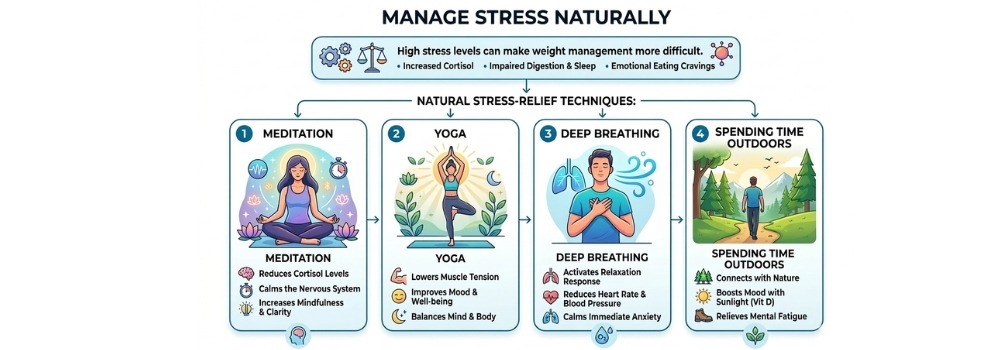
If you have been struggling with how to lose weight with PCOS, you might be overlooking one of the biggest culprits: stress. When you are constantly under pressure, your body pumps out cortisol, the “stress hormone.”
Chronic cortisol elevation is a major roadblock, as it signals your body to hold onto fat, particularly in the midsection, and makes insulin resistance even worse.
If you are wondering how to actually lose weight with PCOS, it is vital to realize that stress management isn’t just “self-care,” it is a medical necessity for your hormones. By actively lowering your stress levels, you are physically telling your body that it is safe to let go of stored weight.
You don’t need to overhaul your life to find peace. Incorporating small, natural stress-relief techniques can make a massive difference in your hormonal health. Here are a few ways to start:
You don’t need to be an expert. Even five minutes of sitting quietly and focusing on your breath can help calm your nervous system and lower those cortisol spikes.
This is a perfect match for PCOS because it combines gentle movement with mindful breathing. It helps you stay active without the high-stress intensity that can sometimes trigger more hunger in those with hormonal imbalances.
When you feel overwhelmed, your breath often becomes shallow. Taking deep, slow breaths, sometimes called “belly breathing,” sends an immediate signal to your brain to shift from “fight or flight” into a calm, restorative state.
Fresh air and sunlight can do wonders for your mood and your sleep cycle. A simple walk in a park or sitting outside for a few minutes can help reset your mental state and lower your stress levels naturally.
If you have been researching how to lose weight with PCOS, you might be focusing entirely on your diet and exercise. However, there is one crucial piece of the puzzle that is often ignored: your sleep. Poor sleep is a major trigger for hormonal imbalance.
When you are sleep-deprived, your body increases ghrelin (your “hunger” hormone) and decreases leptin (the hormone that tells you when you are full). This is exactly why you might find yourself craving sugar and carbs after a sleepless night.
Quality sleep is essentially a “reset button” for your metabolism. It helps lower your cortisol levels, stabilizes your hunger, and gives your body the rest it needs to burn fat efficiently. If you are struggling with how to reduce weight in PCOS, prioritizing your nightly rest is just as important as the food you put on your plate.
You don’t have to struggle through another restless night. By making small adjustments to your evening habits, you can significantly improve the quality of your rest:
This is the “sweet spot” for most adults. Aiming for this range gives your body enough time to move through all the necessary stages of sleep, which is vital for balancing the hormones that regulate your weight.
Your body loves a schedule. Try to go to bed and wake up at the same time every day, even on weekends. A consistent routine helps set your internal body clock, making it much easier to fall asleep and stay asleep throughout the night.
The blue light from phones, tablets, and computers can trick your brain into thinking it is still daytime, which suppresses melatonin (the sleep hormone).
Try to power down your devices at least 30–60 minutes before you plan to sleep. Instead, try reading a book, journaling, or doing some light stretching to help your mind wind down.
While you are learning how to lose weight with PCOS, you might not immediately think of your gut health. However, your digestive system is like the command center for your entire body, influencing everything from how you absorb nutrients to how your body regulates insulin and inflammation.
When your gut is healthy, your hormones are much better supported, making your weight loss journey feel significantly less like an uphill battle.
If you are wondering how to lose weight with PCOS more effectively, paying attention to your gut is a powerful strategy. A happy, balanced gut can improve your metabolism and even help curb those stubborn, sudden cravings that often derail progress. Here are simple, natural ways to keep your digestion on track.
Small changes in your daily diet can make a massive difference in how your gut functions. By focusing on nurturing your digestive system, you not only feel better but also support overall well-being. Here are three effective habits you can start today to improve gut health naturally:
Probiotics are “good” bacteria that help your gut thrive. Adding foods like plain Greek yogurt, kefir, or fermented foods like sauerkraut to your diet can support a healthy gut microbiome, which is essential for managing inflammation and balancing your hormones.
Fiber acts like a broom for your digestive system. It not only keeps your digestion regular but also helps you feel full for longer, reducing the urge to snack. Focus on adding more beans, lentils, flaxseeds, and whole vegetables to your meals to keep things moving smoothly.
Water is the ultimate partner for digestion. It helps break down the food you eat, so your body can absorb the nutrients it needs.
Staying well-hydrated also helps prevent bloating, which is a common concern for many with PCOS. Try to keep a water bottle with you throughout the day; your metabolism and your gut will thank you for it.
When looking for how to actually lose weight with PCOS, it is easy to get overwhelmed by the sheer number of supplements on the market. However, nature offers incredible tools that work in synergy with your body.
Instead of relying solely on pills, you can naturally support your metabolism and lower inflammation by simply choosing the right nutrient-dense foods.
These ingredients aren’t “magic fixes,” but they are powerful allies in helping your body manage blood sugar and reduce the oxidative stress that often accompanies PCOS. Here is how to incorporate them into your daily routine.
This warming spice is more than just a flavor enhancer. Cinnamon has been shown to help improve insulin sensitivity, which is a game-changer for weight reduction in PCOS.
Chronic inflammation is a common hurdle for those with PCOS. Turmeric contains curcumin, a potent anti-inflammatory compound that can help calm the body’s inflammatory response.
Omega-3 fatty acids are essential for hormonal health and can help lower high androgen levels.
Magnesium is often called “nature’s chill pill.” It plays a significant role in blood sugar regulation and helps reduce stress, which is vital for managing the cortisol spikes we mentioned earlier.
You don’t need a complicated regimen to benefit from these nutrients. The goal is to make these foods a regular part of your rotation. By consistently feeding your body these anti-inflammatory and blood-sugar-balancing ingredients, you are creating a much friendlier environment for your hormones.
Remember, these are meant to supplement a balanced diet, not replace it. When you focus on adding these nutrient-dense foods, you’ll naturally crowd out the processed options, making your path to a healthy weight much smoother and more enjoyable.
If you have been wondering how do you lose weight with PCOS and keep it off, the answer lies in one word: sustainability. The journey toward a healthier body is not a sprint; it is a marathon of small, consistent choices.
When you avoid extreme dieting and focus instead on gradual progress, you stop the cycle of “all or nothing” that often leaves people feeling burnt out and discouraged.
How to actually lose weight with PCOS isn’t about hitting a specific number on the scale overnight. It is about building a lifestyle that supports your hormones every single day. By shifting your focus from the scale to the healthy habits you are building, you create a path that is both effective and enjoyable.
Think of your health journey like building a house. You don’t start with the roof; you start with the foundation. Small, consistent changes like swapping a sugary snack for a handful of almonds or adding a 15-minute walk to your day are much more likely to stick than a drastic, overnight life overhaul.
Extreme calorie restriction or cutting out entire food groups can signal to your body that it is in a “starvation” state, which often spikes cortisol and triggers weight gain in those with PCOS.
Instead, focus on nourishing your body with nutrient-dense, blood-sugar-balancing foods. Your body will feel safer and more willing to shed excess weight when it is properly fed.
The scale is just one metric, and with PCOS, it can be a stubborn one. Instead, start tracking your non-scale victories (NSVs). Did you have more energy today? Did your afternoon cravings disappear? Did you get a solid seven hours of sleep? These are all signs that your metabolism is healing. Celebrate these wins; they are the true indicators of your long-term success.
Every time you choose a fiber-rich meal or practice deep breathing to manage stress, you are winning. Acknowledge these moments! By celebrating small steps, you stay motivated and maintain positive mental health. This journey is about progress, not perfection.
If you are dealing with PCOS treatment weight gain, it’s important to consult the right healthcare professionals who can guide you toward safe and sustainable weight management. A gynecologist or endocrinologist can help assess hormonal imbalances associated with PCOS. At the same time, a qualified nutritionist or dietitian can create a gut reset meal plan that supports healthy weight loss and balanced blood sugar levels.
Lifestyle guidance from fitness experts and stress management through wellness practices can also play an important role. At Natural Healing Haven, a holistic approach that focuses on nutrition, lifestyle changes, and natural methods can help women effectively manage PCOS symptoms and weight gain.
Eventually, managing your weight with PCOS is entirely possible when you shift your focus from restrictive quick fixes to a natural, sustainable process that honors your body’s unique needs. By adopting balanced nutrition, consistent movement, intentional stress management, and restorative sleep, you create a foundation where your hormones can finally grow rather than struggle. Remember that you do not need to be perfect; rather, it is the small, daily habits like choosing fiber-rich foods, taking a mindful walk, or prioritizing your nightly rest that compound over time to create long-lasting changes.
You have the power to influence your metabolic health one step at a time, so keep focusing on your progress, celebrate your non-scale victories, and stay committed to the journey of nourishing your body from the inside out.
There is no magic quick fix. The fastest, most sustainable approach is to prioritize blood sugar stabilization. This means consistently eating high-fiber, high-protein meals to reduce insulin spikes, paired with regular, low-impact movement.
It can certainly feel more difficult because hormonal imbalances, specifically insulin resistance, change how your body stores fat and regulates hunger. However, by working with your hormones through nutrition and stress management, you can make the process significantly more manageable.
A PCOS belly often appears as stubborn weight gain concentrated around the midsection. This is often due to elevated insulin and cortisol levels, which signal the body to store fat in the abdominal area.
You should focus on limiting highly processed foods that cause intense blood sugar spikes. This includes sugary drinks, sodas, and refined carbohydrates like white bread, pastries, and pasta. Additionally, try to avoid packaged snacks that are loaded with hidden sugars and unhealthy inflammatory oils.
My name is Minaam Jamil, and I’m a natural health practitioner with a background in pharmacy, a heart rooted in holistic healing, and a journey shaped by many cultures. I was born in Pakistan, lived in the UK, Middle East, and now call Calgary home. Each place gifted me a different kind of wisdom scientific, spiritual, ancestral and together they’ve shaped how I care for others. I started The Natural Healing Haven because I know what it feels like to search for answers that conventional medicine can’t always provide. After years in pharmacy and becoming a mother, I felt called to explore gentler, more intuitive ways of healing ones that honor the body’s design, the soul’s needs, and the sacred connection between the two.


